







Psychopomp
Words by Dr Alice Gorman
Rituals of Earth and space [need something better with rockets in it maybe?]
In the contemporary technosphere, it is often assumed that the rockets which transport satellites into Earth orbit or landers to the surface of the Moon are engineering objects with no emotional or symbolic dimensions.
But for the archaeologist, rockets are objects like any other, material things which come into being in a particular social and political context with multivalent meanings. They symbolise a range of human beliefs and they are created and launched accompanied by rituals which embody those beliefs.
Gravity, sex, magic
The founder of psychoanalysis, Sigmund Freud, maintained that flying machines (balloons, zeppelins and aeroplanes) appearing in dreams symbolised the male erection. But women also dreamed of flying, soaring through the sky and looking down on the houses and fields below. To keep his theory intact, he attributed women’s desire to fly to penis envy.
Freud asserted that an erection ‘cannot fail to be impressive, involving as it does an apparent suspension of the laws of gravity’ (Freud 1913:394). The laws of gravity were uppermost in women’s minds, apparently, when confronted with one.
The possibility of space-going rocket technology was very much in the air in the intellectual ferment of 1930s Vienna, just as it was in Germany, before Freud and his family fled to London in 1938 to escape Nazi persecution. Freud would no doubt have seen space rockets as penis symbols too; but he died in 1939, before the first V2 rockets began bombarding London.
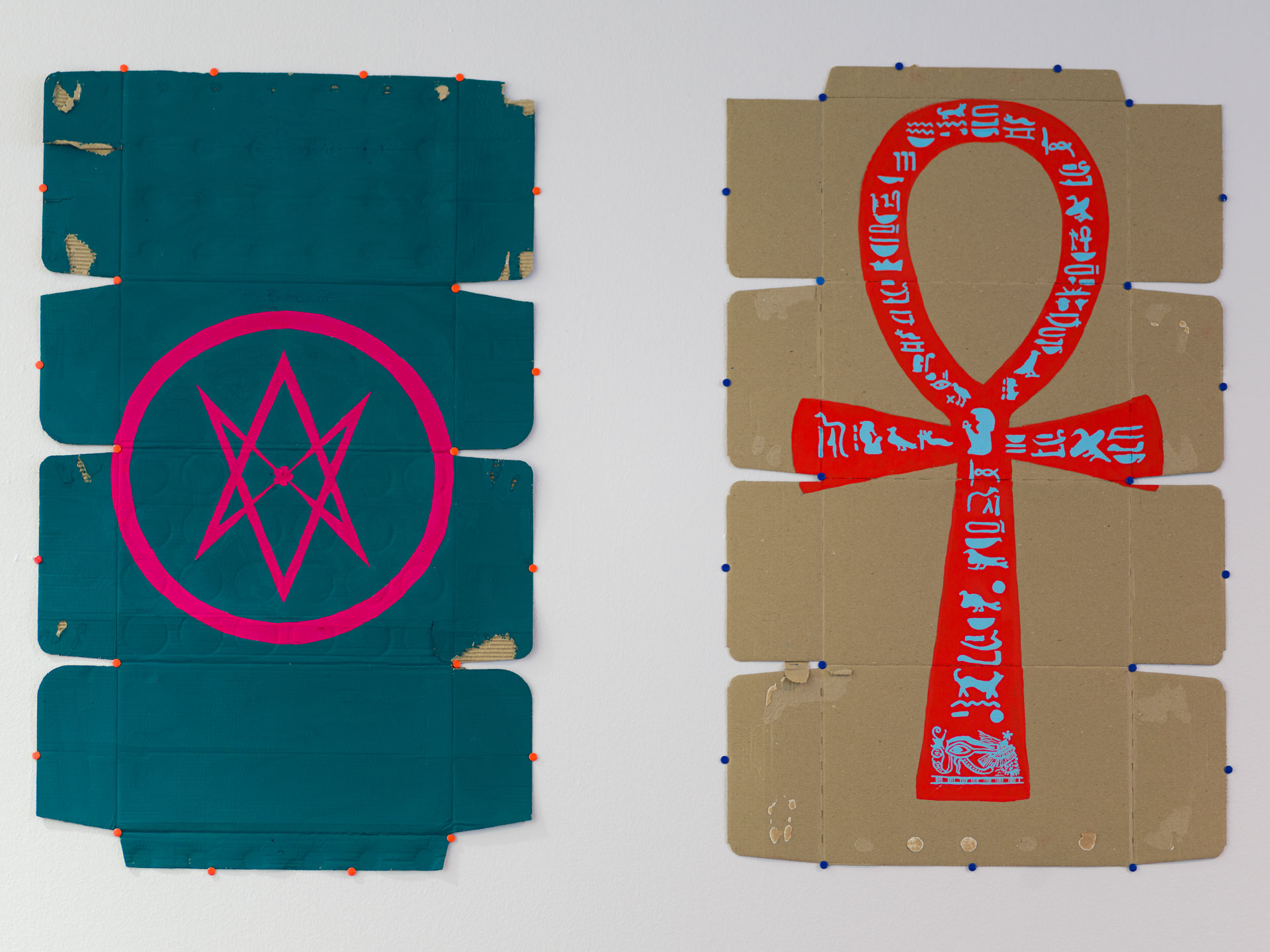
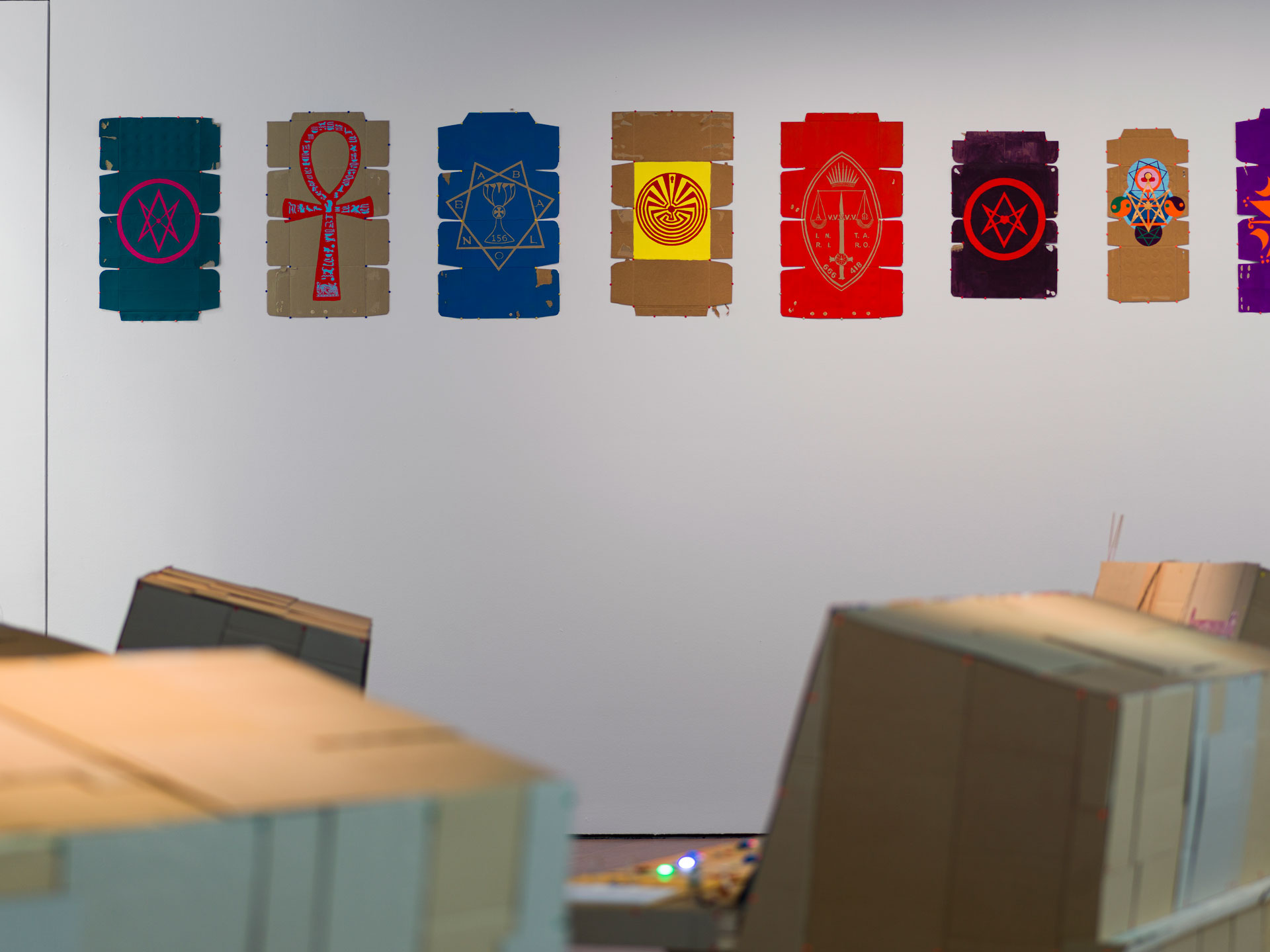
The British magician Aleister Crowley did live through the war, to see the same rockets which would later go into space being used as weapons. From afar, he influenced the course of rocket development in the US. Jack Parson, one of the founders of the Jet Propulsion Laboratory, has become famous as a follower of Crowley as well an innovative engineer. Parsons enacted Crowley’s sex magic rituals with his circle of devotees and chanted Crowley’s Hymn to Pan at launches. Ironically, psychoanalysts in the pay of the FBI were used to carry out surveillance on Parsons and his fellow rocket scientists (MacDonald 2019).
For Parsons, the science of space travel and the rituals of magic were both ways to access other worlds.
Rites of passage
In 1909, the ethnographer Arnold van Gennep published a book that was to become highly influential in anthropology. In Rites of Passage, he described the chronological sequence of certain types of ritual as a spatial process, like moving through the rooms of a house. The first phase was separation from the old world. Crossing the threshold led to the liminal or waiting phase, a space between spaces where ritual actions would take place. These rituals enabled the participant to leave the house to become incorporated into a new world or a new state of being – like adulthood, or marriage, or death. For initiation rites, for example, this new state of being was often adulthood, or membership of a society.
The launch of a rocket is also a spatial transition between different states of being. The liminal space is everything between the Earth and outer space – visually, the sky. An orbital rocket sheds parts of its Earthly self, in the form of the first and second stages which fall back to Earth when their fuel is consumed. The third rocket stage attains the state of the initiate, its final purified self incorporated as a space object.
I think of the rocket as the one undergoing a rite of passage, but maybe it’s the spectators, who look to the rocket as their proxy to inhabit other worlds. Every time a rocket is launched from Cape Canaveral in Florida, thousands of people flock to see it. The launches are often live-streamed so that people can experience the thrill of a successful launch from anywhere in the world. They speak of it as an awe-inspiring, emotional experience.
The power of this ritual is demonstrated by a lesser-known part of Apollo history. The Reverend Ralph Abernathy was Martin Luther King Jr’s successor as president of the Southern Christian Leadership Conference. The day before the Apollo 11 mission was due to launch in 1969, he led a protest march to the launch site and confronted NASA Administrator Tom Paine at a press conference. Abernathy spoke, deploring the amount of money spent to send men to the Moon when there was poverty, homelessness and lack of medical care on Earth. Among his demands was a request for tickets to attend the launch.
Paine granted the tickets, and the next day a group of Abernethy’s supporters were admitted to the VIP area to watch the massive Saturn 5 rocket take off. Abernethy prayed for the safety of the astronauts and expressed his pride in their achievement (History News Network 2019).
The reason I tell this story is because of what it says about the ritual. The tickets Abernethy demanded were more than a gesture of welcome or conciliation, or to satisfy a naïve fascination with the spectacle. The protestors crossed the threshold into the VIP viewing area, experienced the liminal phase of rocket ignition, a baptism by fire, and stared upwards at the trail of the rocket until it could no longer be seen, on its way to take men to an actual other world which would be beamed into living rooms across the globe a few days later. Through this rite of passage the protestors were initiated into the ranks of the techno-elite – a subversion of the rite which Abernethy orchestrated to gain ritual power.
The sky as the liminal phase
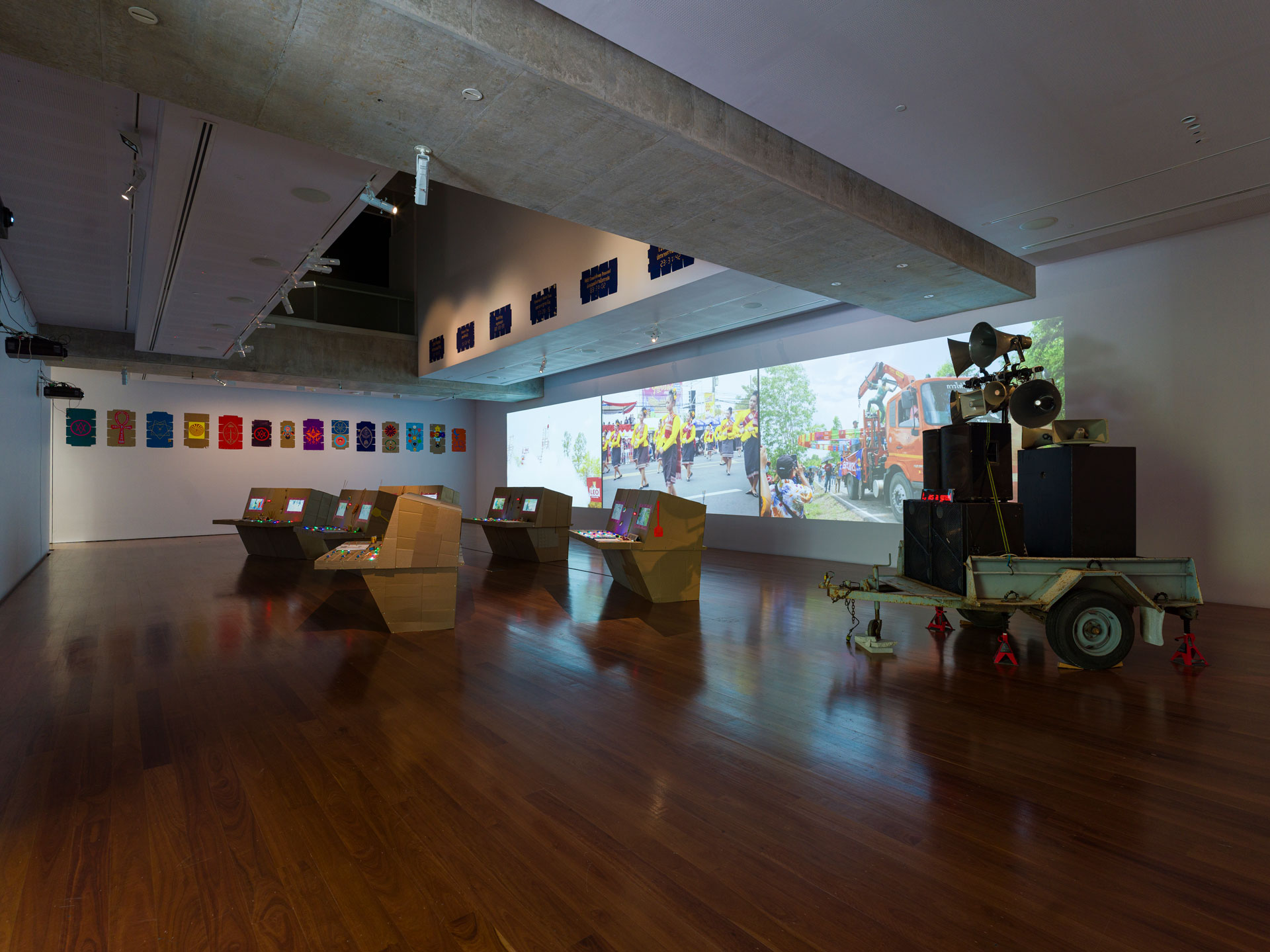
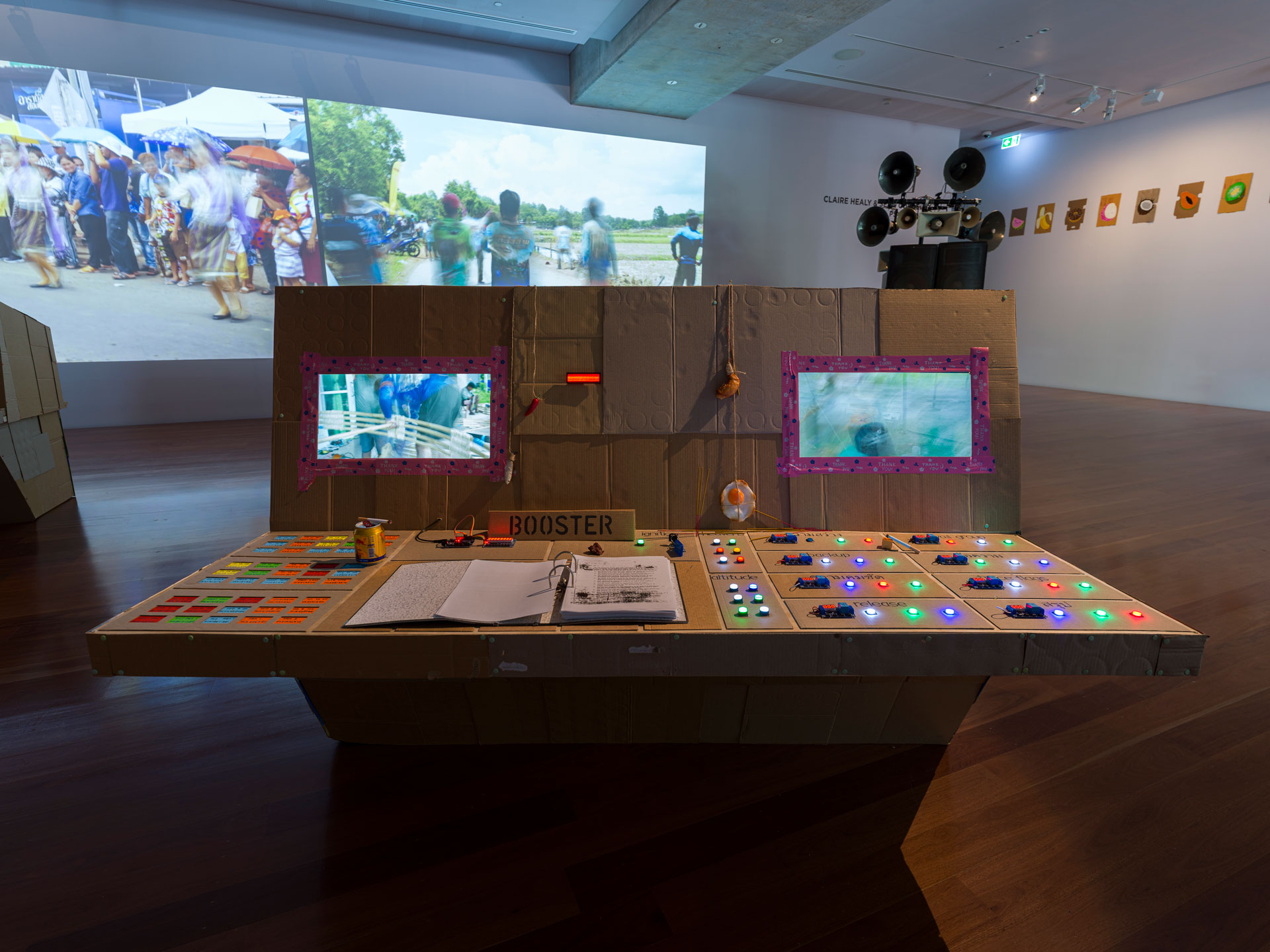
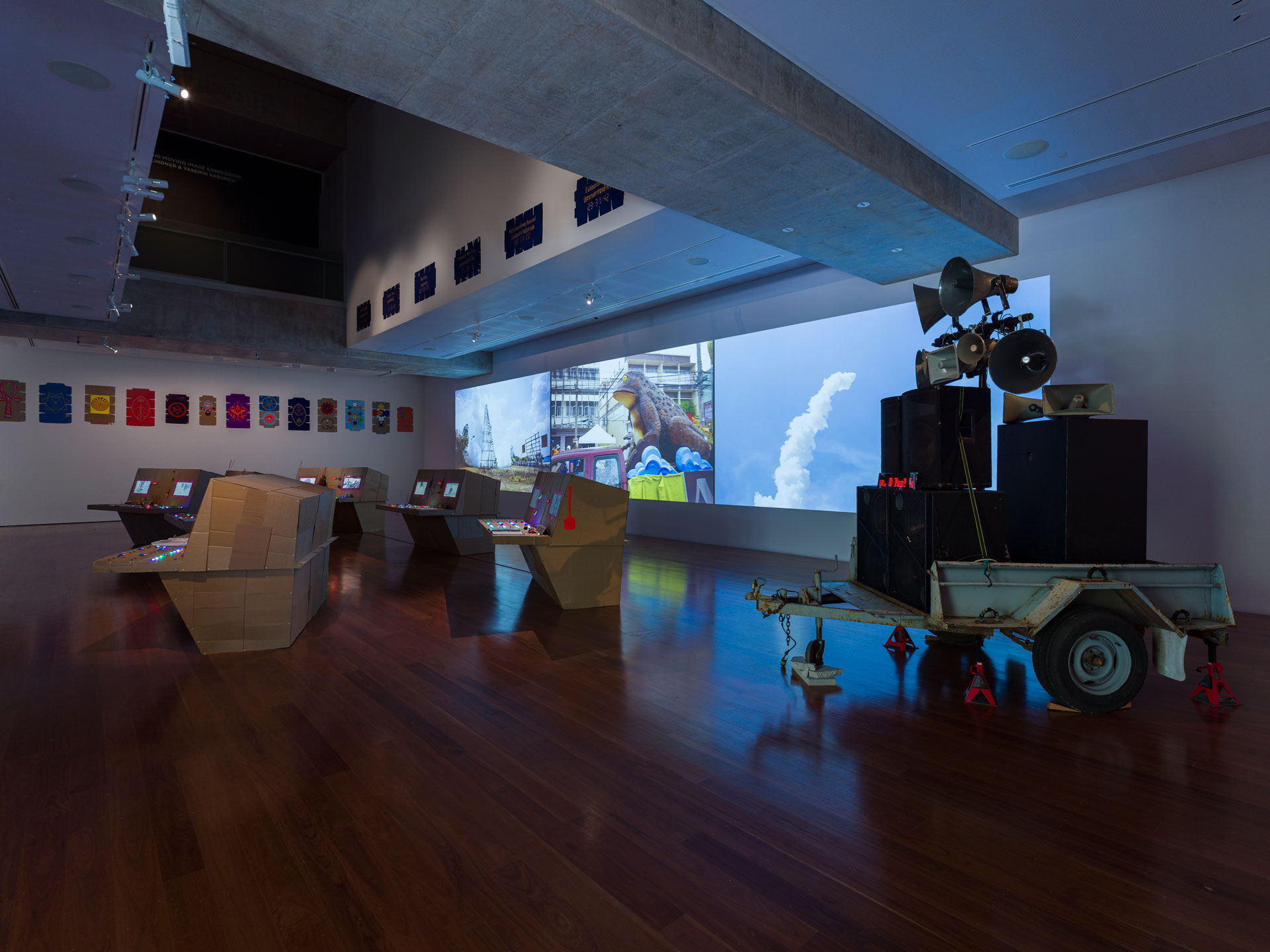
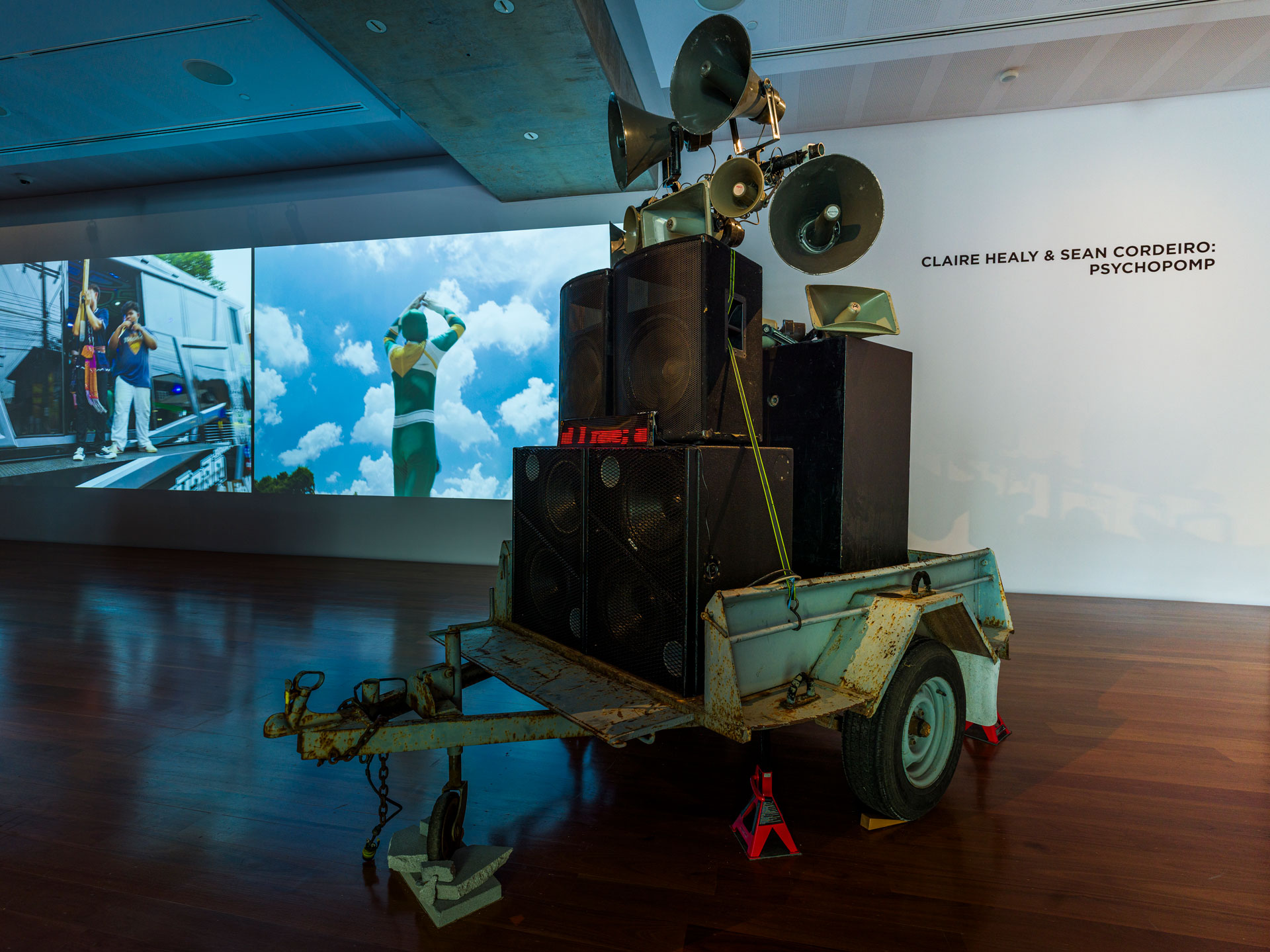
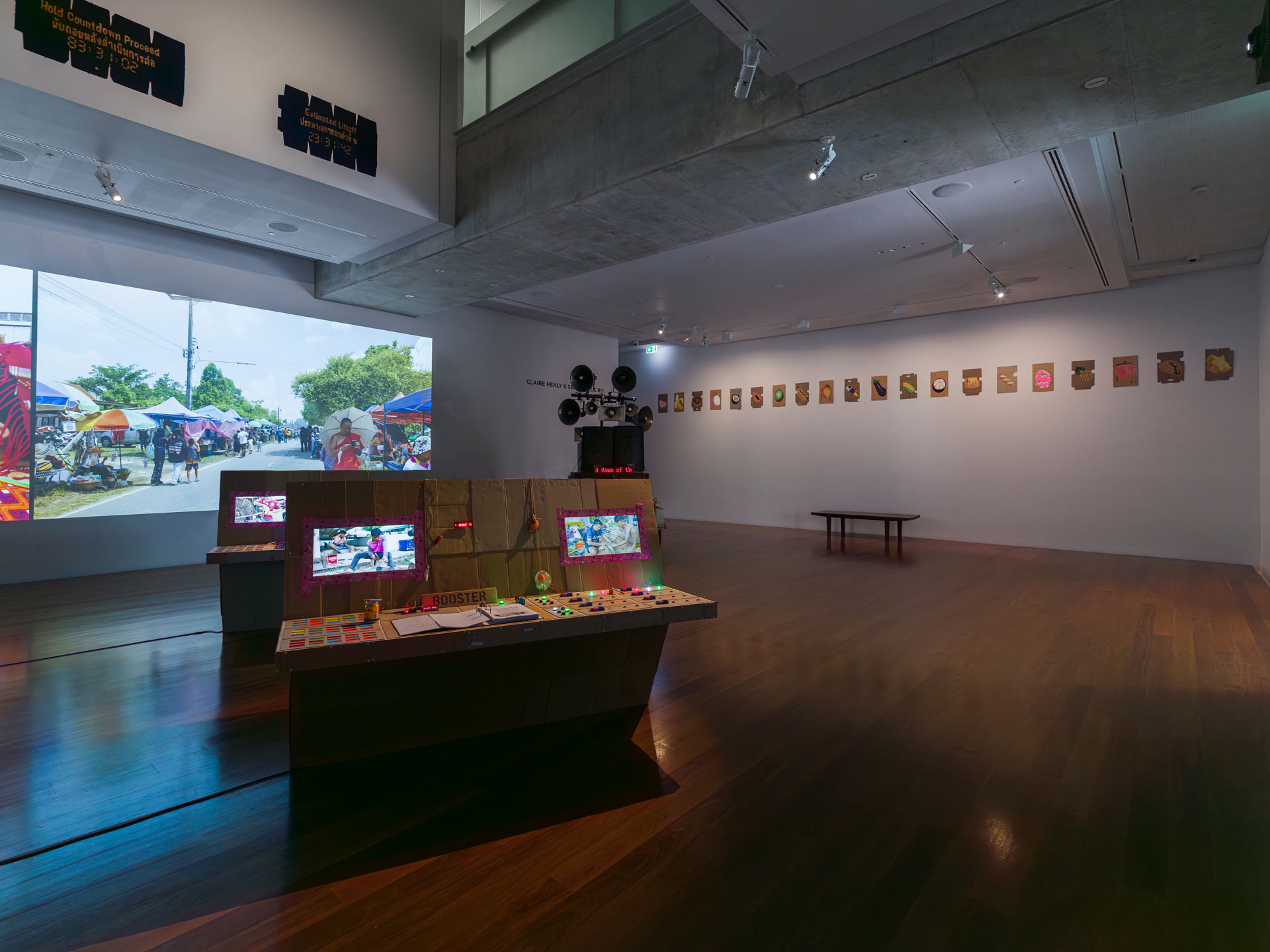
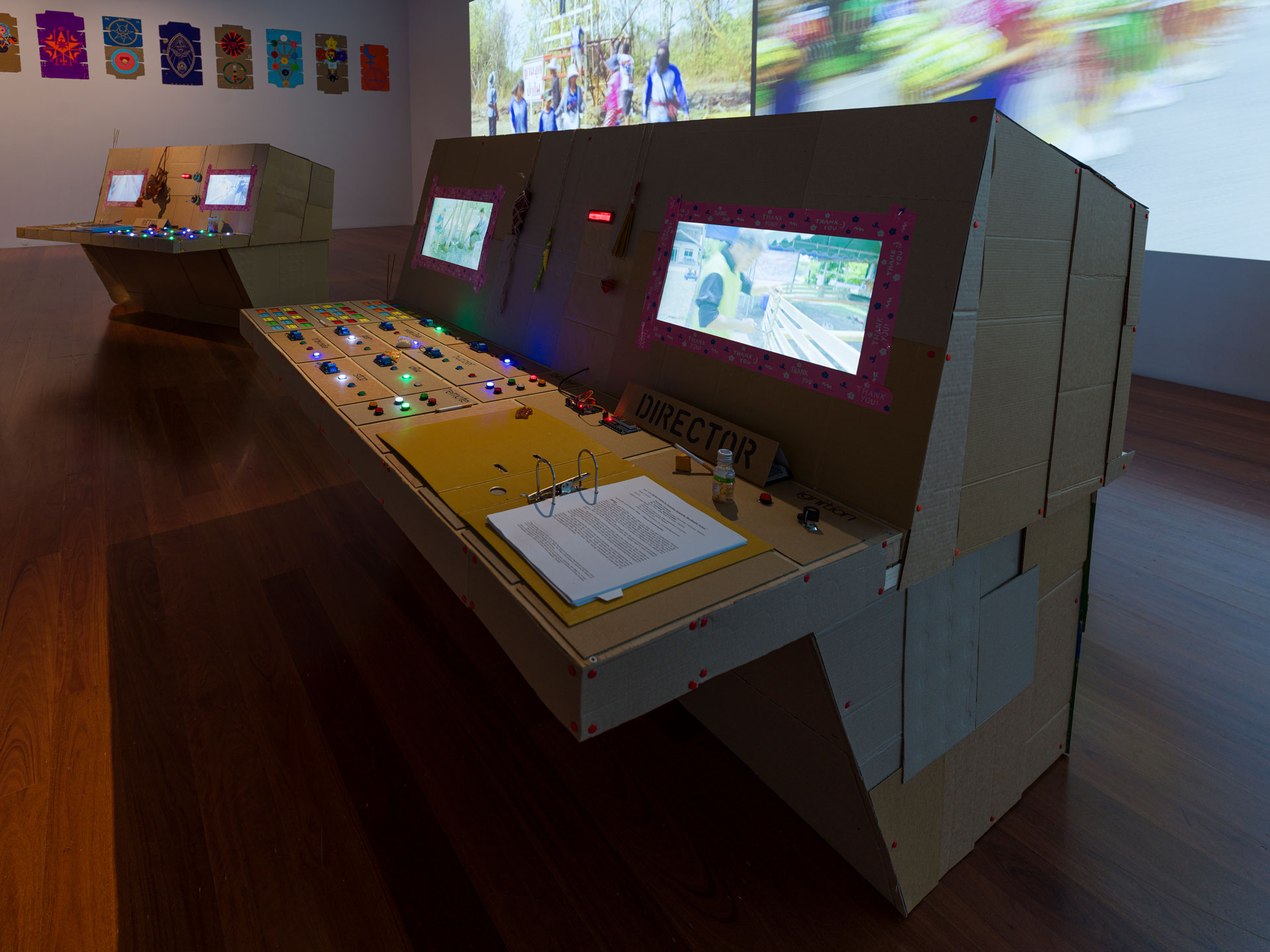
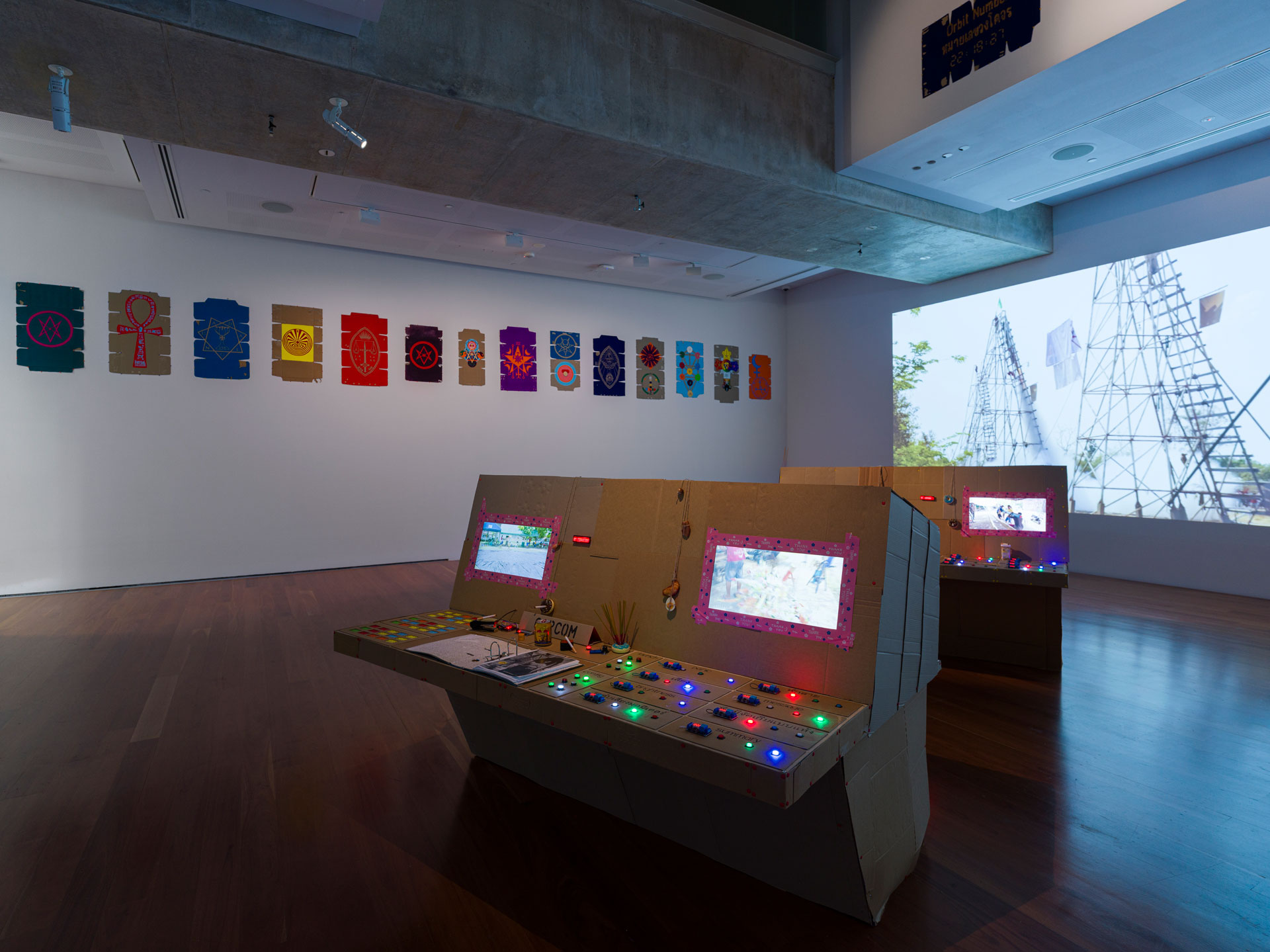
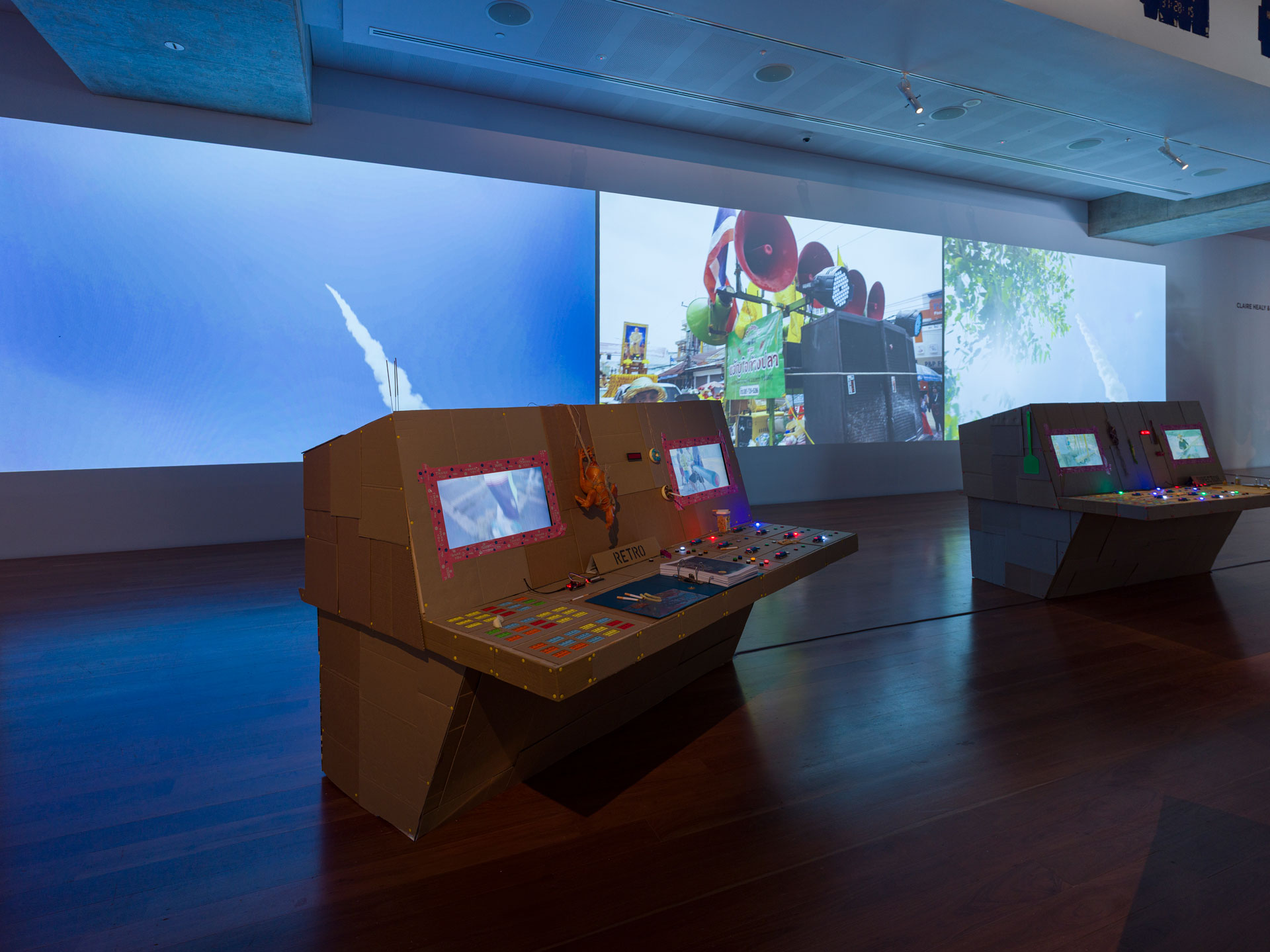
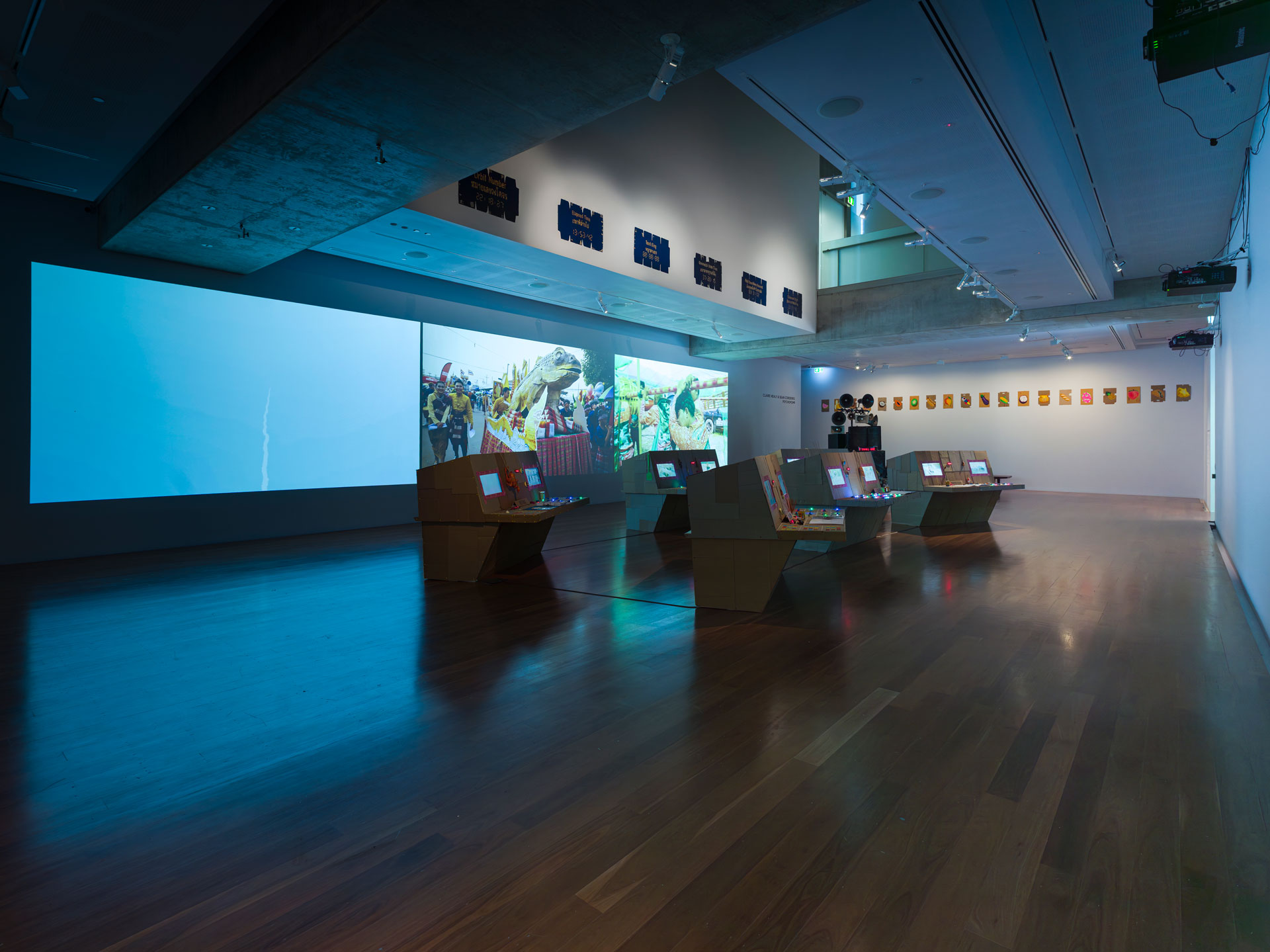
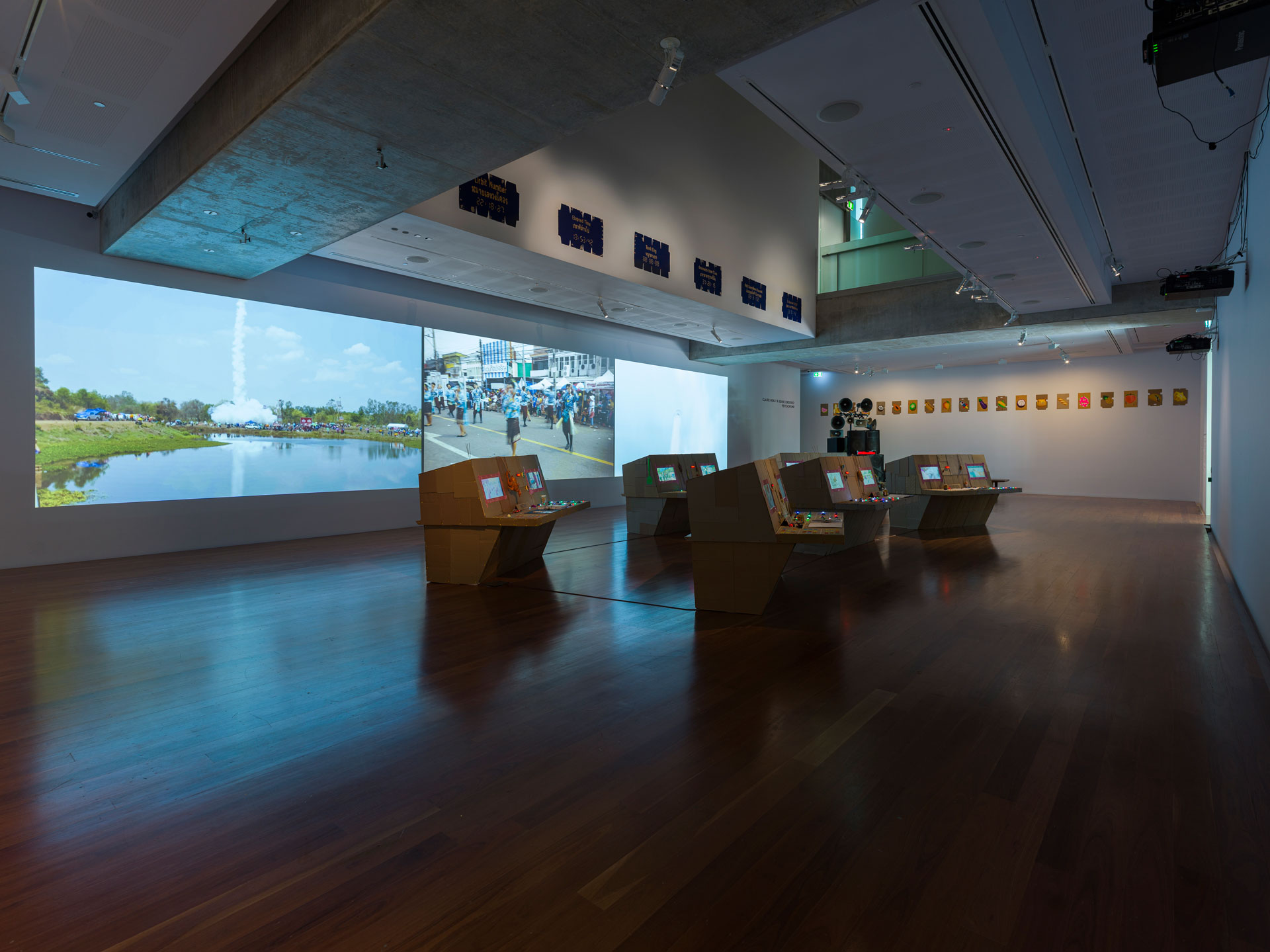
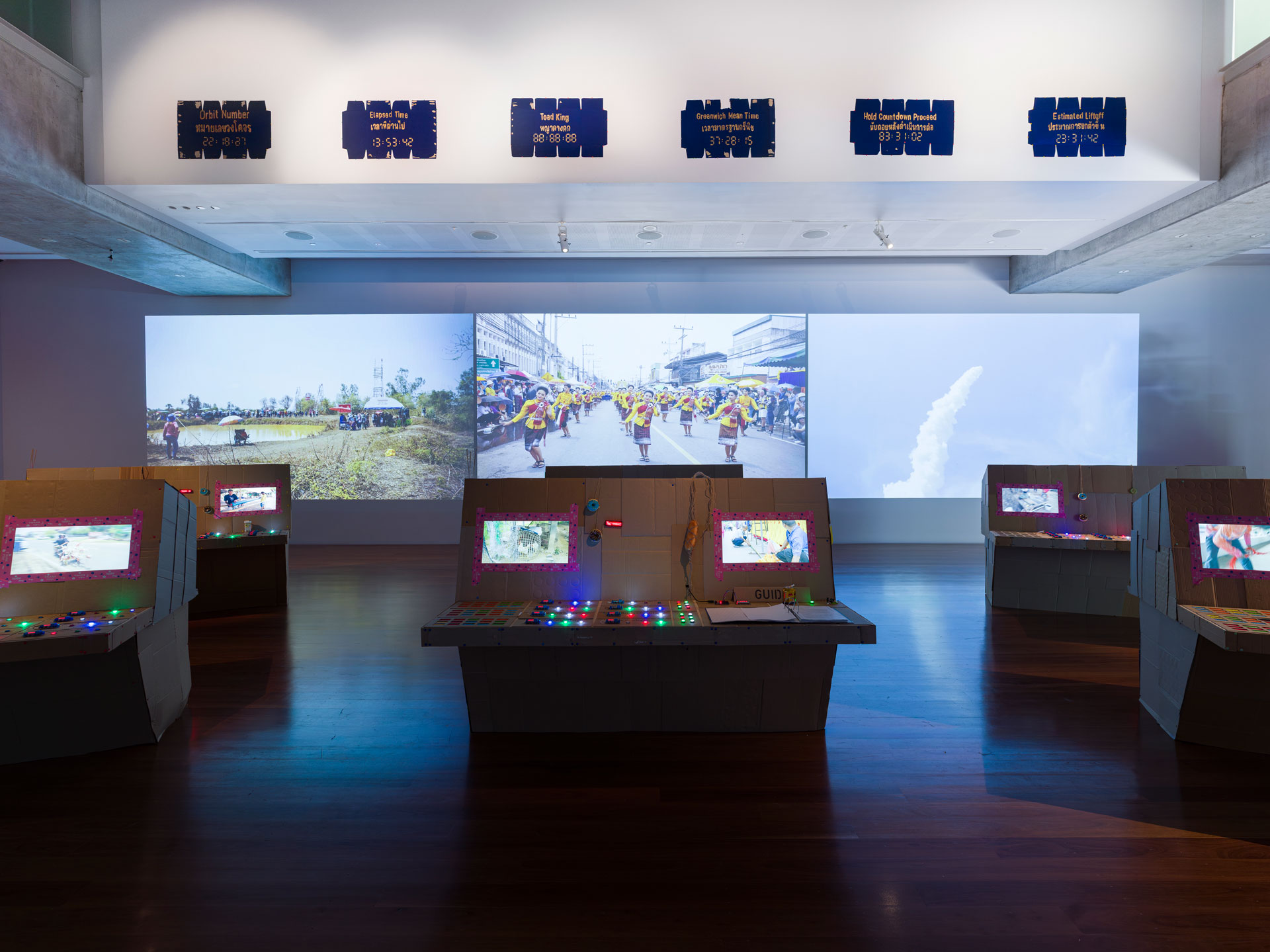
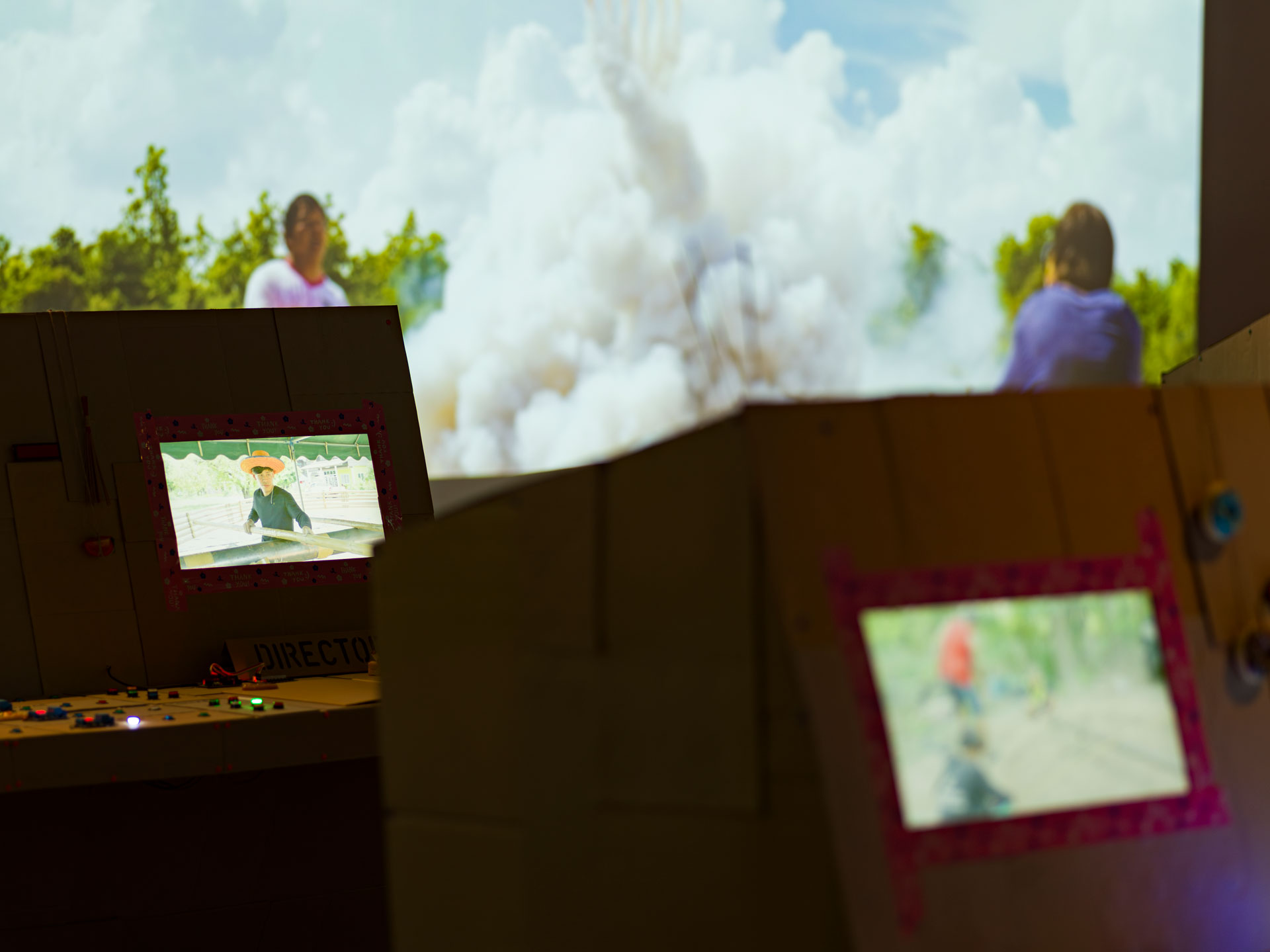
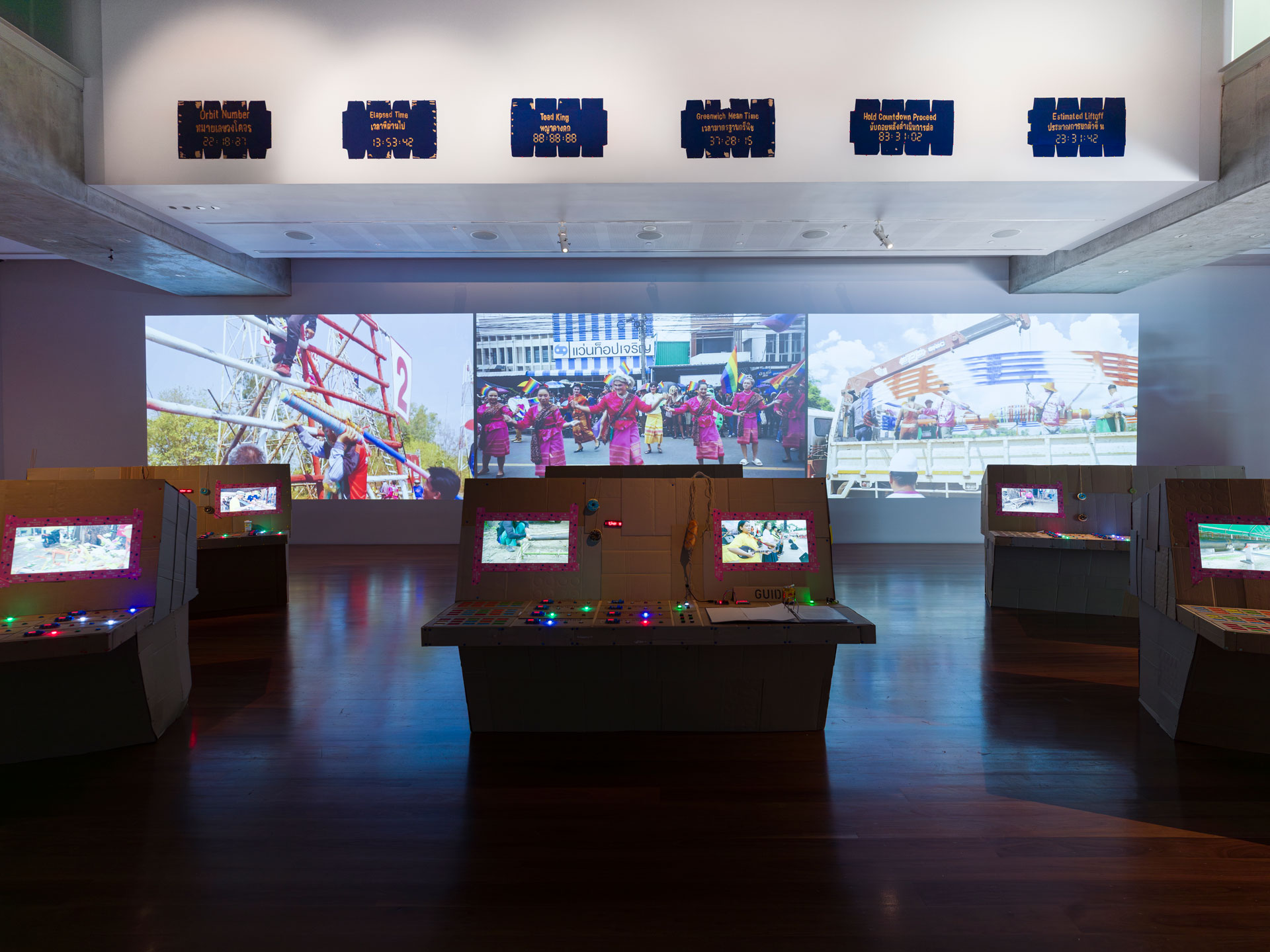
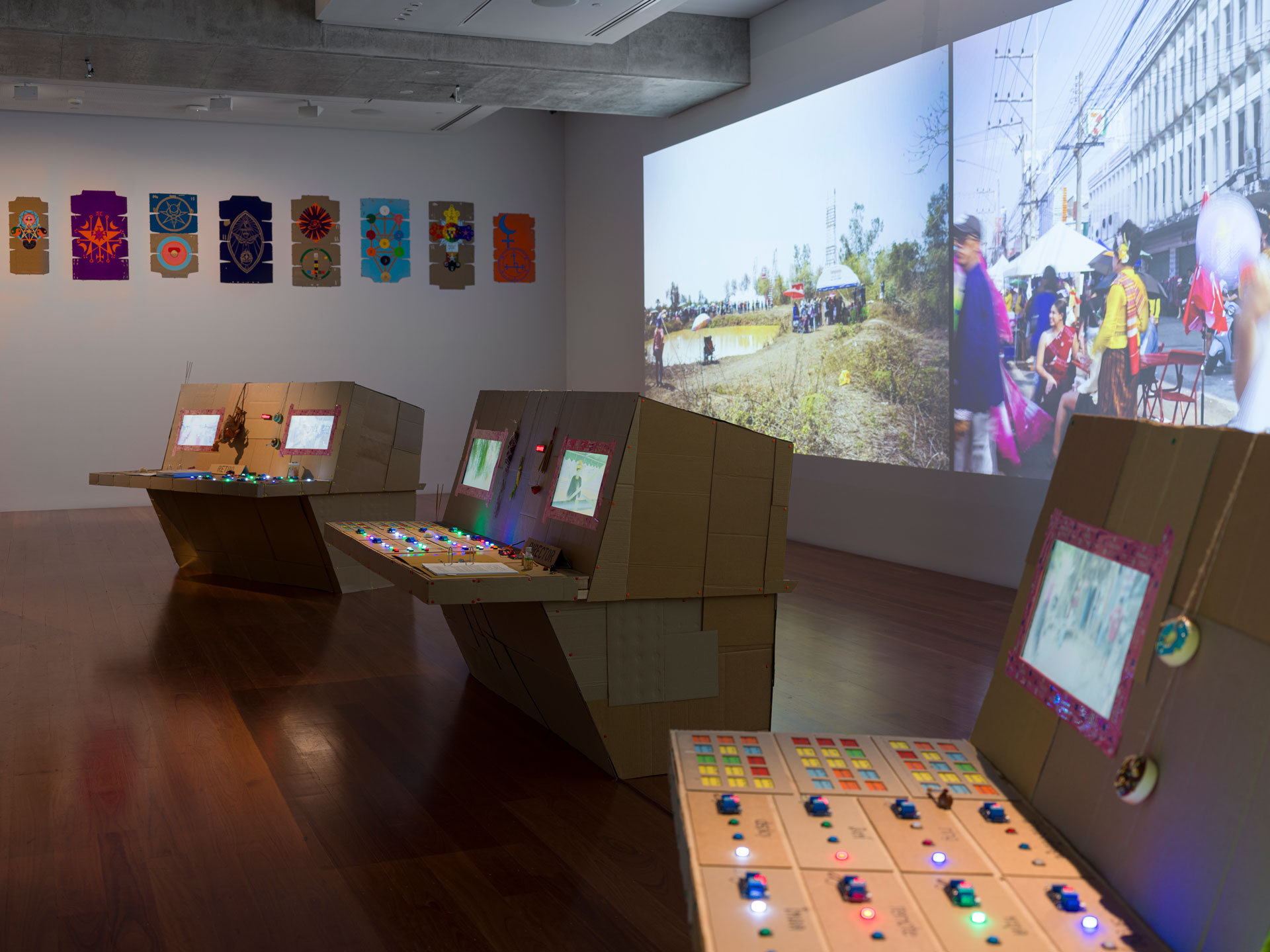
In May every year, people gather for the Bun Bang Fai rocket festival which takes place in towns and villages across Laos and northern Thailand. The festival has deep roots in Buddhist and pre-Buddhist philosophy and traces a rocket lineage different to that of the so-called ‘spacefaring’ nations, which diverged from the common ancestor of Chinese gunpowder-based explosives in the early 20th century.
These rockets are not metal behemoths but slender bamboo or PVC tubes, fuelled by black powder. Some are mounted inside a hoop, which produces a barley-twist smoke trail as the multiple rocket jets fitted across the diameter cause the hoop to spin. The largest rockets can reach an altitude of around a kilometre.
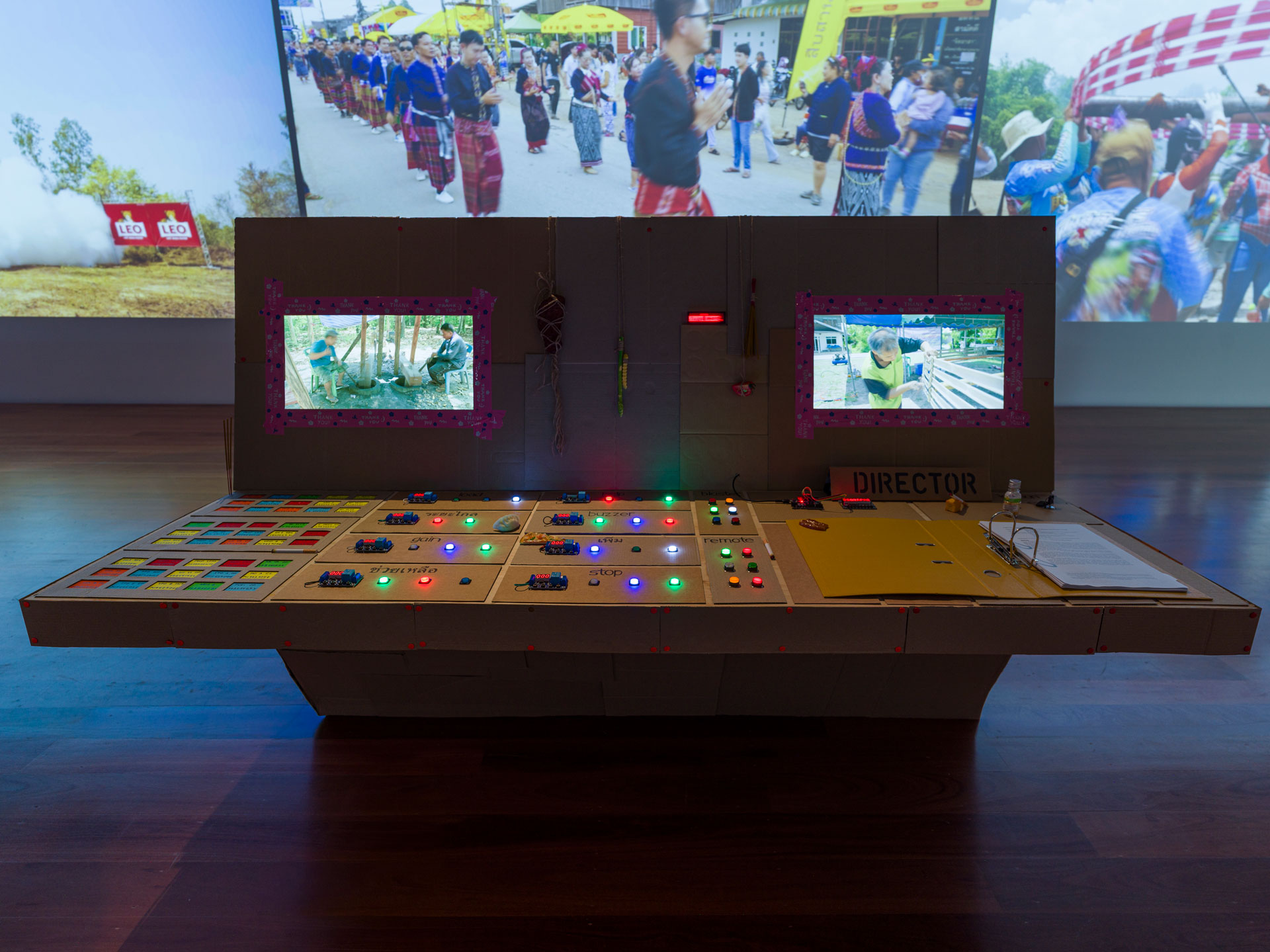
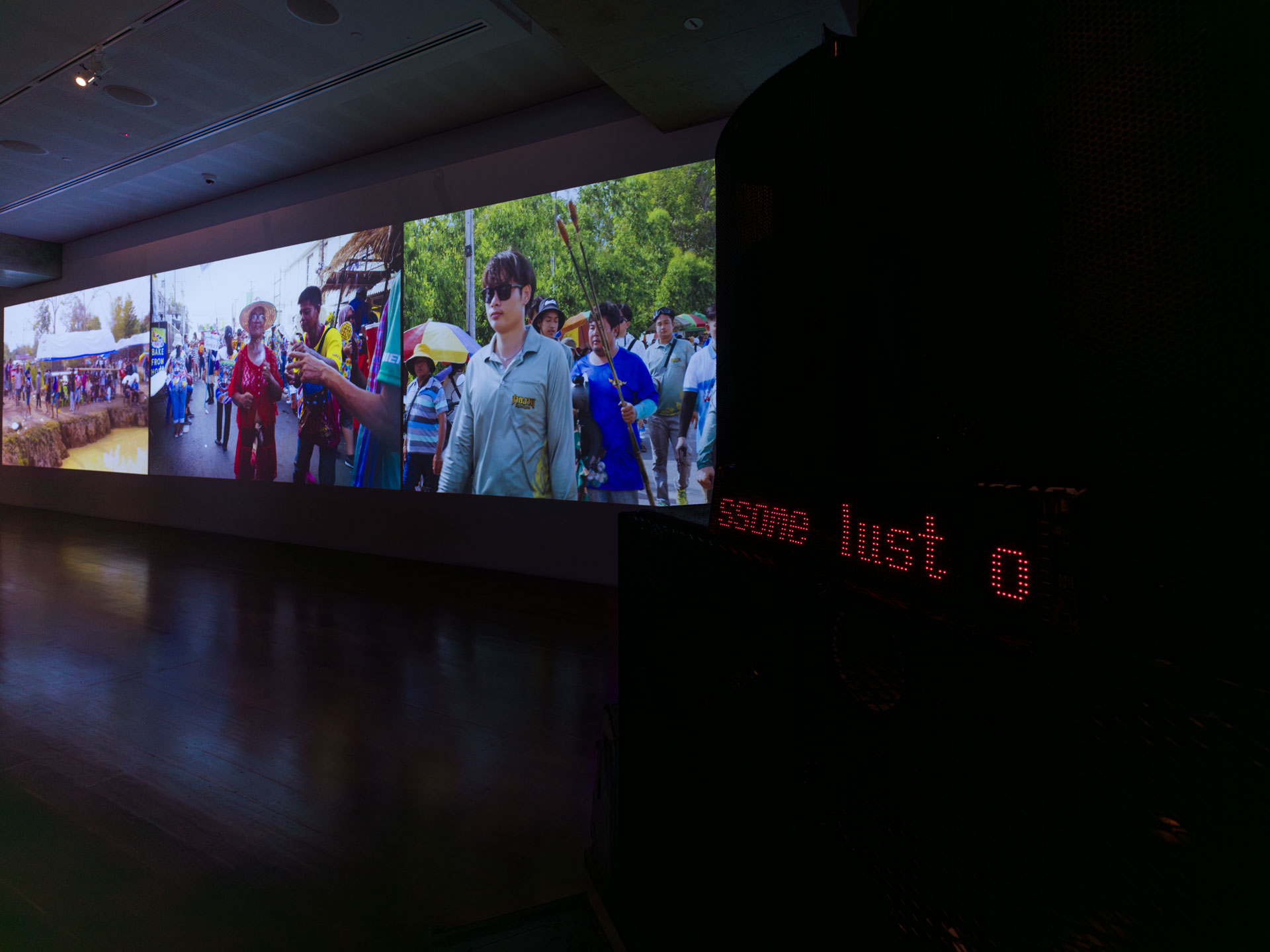
Street parades, dancing, food, costumes and a carnival atmosphere accompanies the Bun Bang Fai in its myriad manifestations. Religious ceremonies are woven into fabric of the festivals. Rocket teams and dance troups compete with each other, and there is often overt penis symbolism in the parade floats and costumes.
There is no carefully segregated hierarchy of distance from the ground zero of launch, as there is at high security launch facilities for military and space rockets. The rocket is ignited, smoke billows and the rocket rises until it reaches a vanishing point high in the sky and disappears. Rockets bring the sky closer. It becomes a place, not just a flat blue shell. People follow the path of the rocket into the liminal blue from chairs and deck chairs in the surrounding fields, using portable cabanas to provide shade. It is an embodied process of bearing witness.
These rockets don’t have to promise the Moon. The liminal phase is identical to that witnessed by the VIPs and fringe spectators at Cape Canaveral, as the rocket leaves Earth and enters an indeterminate state, neither in this world or yet the next, against the backdrop of the sky. Resolution or re-incorporation in this rite of passage may take seconds, minutes or hours, depending on when the rocket falls back to Earth.
But some rockets don’t fall back. Those that reach sufficient altitude are perpetually falling towards Earth, but never reaching it. In another interpretation, Low Earth Orbit is not the place where the initiate emerges but the ultimate space of liminality, where the space object roams the rooms of the house unable to get out.
Magic, technology, ritual
In the 1960s, British science fiction author Arthur C. Clarke wrote that any sufficiently advanced technology is indistinguishable from magic. Although he meant alien technology, colonialist assumptions underpin the ‘law’. It draws on the idea that ‘advanced’ white civilisations can subdue ‘primitive’ societies by predicting eclipses or using guns, which will appear magical and convince the conquered that they cannot hope to resist. It also assumes a hierarchy of knowledge with magic at the bottom —but still conferring power on those who exploit it.
In discussing Thailand’s astronomy and UFO communities, anthropologist Lauren Reid talks of ‘the modernist philosophical assumption that technoscientific progress moves in step with the diminishment of religious and so-called magical interpretations of the world’ (Reid 2023:296)
Rather than a hierarchy or an evolutionary march of progress that culminates with rockets at the pinnacle, we should rather see an entanglement and interleaving of magic and technology. The rituals that tie Earth and space together are often rites of passage where rockets are proxies for new, hoped-for existences. The US rocket pioneer Robert Goddard successfully tested the first liquid-fuelled rocket in 1926. Perhaps he expressed this desire best when he wrote in his journal (NASA 2016) that the rocket ‘looked almost magical as it rose, without any appreciably greater noise or flame, as if it said, “I’ve been here long enough; I think I’ll be going somewhere else, if you don’t mind.”’
References
Clarke, Arthur C. 1968 Clarke’s Third Law on UFO’s. Science 159(3812): 255.
Freud, Sigmund. 1913 [1899] The Interpretation of Dreams. Translated by AA Brill. New York: Macmillan and Co
MacDonald, Fraser 2019 Escape from Earth. A Secret History of the Space Rocket. New York City: PublicAffairs
Van Gennep, Arnold 1909 Les Rites du Passage. Paris: Émile Nourry
History News Network 2019 Why civil rights activists protested the Moon landing. https://www.historynewsnetwork.org/article/why-civil-rights-activists-protested-the-moon-land
Reid, Lauren 2023 Divergent extraterrestrial worlds. Navigating cosmo-practices on two mountaintops in Thailand. In Juan Francisco Salazar and Alice Gorman (eds) The Routledge Handbook of Social Studies of Outer Space, pp 295-307. London: Routledge
NASA 2016 NASA celebrating 90 Years: Robert Goddard’s rocket and the launch of spaceflight https://www.nasa.gov/general/nasa-celebrating-90-years-robert-goddards-rocket-and-the-launch-of-spaceflight/